Sunday, 21 April 2024

Enhance Railway Safety and Efficiency with Railroad Cold Air Blowers


Railway operations often face challenges due to adverse weather conditions, such as extreme temperatures and snow accumulation, which can affect track conditions and train performance. To address these challenges, railroad maintenance crews rely on specialized equipment like cold air blowers to maintain safe and efficient operations. Now, we'll explore the significance of railroad cold air blowers, their functionalities, and how they contribute to the safety and efficiency of railway operations.


Introduction to Railroad Cold Air Blowers

Railroad cold air blowers are powerful machines designed to remove snow and ice buildup from railway tracks, switches, and other critical infrastructure. They utilize high-speed air streams to dislodge snow and ice, preventing track obstructions and ensuring safe passage for trains, particularly in regions prone to winter weather conditions.


Functionality and Operation

Cold air blowers operate by generating a concentrated stream of cold air at high velocity, which is directed onto the railway tracks and switches. This cold air effectively breaks up and removes snow and ice accumulations, clearing the tracks and restoring normal railway operations. Some cold air blowers are mounted on specialized vehicles, allowing for efficient deployment and maneuverability along railway corridors. 


 Importance in Railway Maintenance

Railroad cold air blowers play a crucial role in maintaining railway safety and efficiency, especially during winter months. Some key benefits include: 

·         Preventing Track Blockages: By quickly and effectively removing snow and ice buildup, cold air blowers help prevent track blockages and maintain uninterrupted train operations.

·         Enhancing Safety: Clearing snow and ice from railway tracks reduces the risk of derailments, ensuring the safety of passengers, crew, and cargo.

·         Improving Reliability: Cold air blowers contribute to the reliability of railway operations by minimizing weather-related delays and disruptions, allowing trains to adhere to schedules more consistently.


Versatility and Adaptability

Railroad cold air blowers are versatile tools that can be adapted to various railway maintenance tasks and environments. Some models feature adjustable nozzles and airflow settings to accommodate different track configurations and conditions. Additionally, cold air blowers can be used in conjunction with other snow removal equipment, such as plows and de-icing agents, to effectively manage winter weather challenges.


Environmental Considerations

While railroad cold air blowers are highly effective in snow and ice removal, they also come with environmental considerations. Some modern cold air blowers are designed to minimize noise pollution and emissions, incorporating eco-friendly features such as quieter engines and reduced fuel consumption. Additionally, operators are encouraged to use cold air blowers judiciously and in accordance with environmental regulations to minimize their ecological impact. 


Railroad cold air blowers are indispensable tools for maintaining safe and efficient railway operations, particularly in regions with harsh winter weather conditions. By quickly and effectively removing snow and ice buildup from railway tracks, these machines contribute to the reliability, safety, and resilience of railway infrastructure. As railway technology continues to evolve, cold air blowers will remain essential equipment for ensuring the smooth operation of trains in all seasons.

Thursday, 18 April 2024

Exploring the Versatile Applications of Hi-Rail Technology


Innovation in rail technology has paved the way for versatile solutions that enhance efficiency, safety, and flexibility in various industries. One such innovation is Hi-Rail technology, which combines the capabilities of both road and rail vehicles, offering a wide range of applications across different sectors. Let’s delve into the diverse applications of Hi-Rail technology and how it is revolutionizing operations in transportation, construction, maintenance, and beyond.


1. Transportation Sector

Hi-Rail technology has significantly transformed the transportation sector, providing a flexible and efficient means of transporting goods and passengers. Some of the key applications include:

·         Freight Transport: Hi-Rail vehicles enable the transportation of freight along both road and rail networks, offering seamless connectivity between different modes of transportation.

·         Passenger Services: Hi-Rail buses and coaches facilitate passenger transportation in areas with limited rail infrastructure, providing a cost-effective alternative for commuters.


2. Construction and Maintenance

In the construction and maintenance industries, Komatsu Hi-Rail technology offers invaluable support for accessing remote or hard-to-reach locations. Here are some notable applications:

·         Track Maintenance: Hi-Rail vehicles equipped with specialized equipment are used for track inspection, maintenance, and repair on railway networks.

·         Infrastructure Projects: Hi-Rail trucks and cranes are deployed for construction projects along railway lines, such as bridge repairs, signal installations, and track upgrades.


3. Utility Services

Komatsu Hi-Rail technology plays a vital role in supporting utility services, particularly in maintaining and repairing critical infrastructure. Some common applications include:

·         Telecommunications: Hi-Rail vehicles are utilized for installing and maintaining telecommunications infrastructure, such as fiber optic cables and transmission towers along railway corridors.

·         Power Utilities: Hi-Rail equipment is employed for servicing power lines, transformers, and substations located near railway tracks, ensuring reliable electricity supply.


4. Emergency Response

During emergencies or natural disasters, Komatsu Hi-Rail vehicles provide essential support for emergency response teams. Here are a few examples:

·         Search and Rescue: Hi-Rail vehicles equipped with specialized rescue equipment can access remote areas affected by emergencies, facilitating search and rescue operations.

·         Disaster Relief: Hi-Rail trucks transport supplies, equipment, and personnel to disaster-affected areas, aiding in relief efforts and infrastructure restoration.


5. Environmental and Conservation Efforts

Hi-Rail technology also contributes to environmental conservation efforts and sustainable practices:

·         Vegetation Management: Hi-Rail vehicles are used for vegetation management along railway corridors, helping to control weeds, clear vegetation, and prevent fire hazards.

·         Wildlife Monitoring: Hi-Rail platforms equipped with observation equipment enable researchers to conduct wildlife monitoring and conservation activities in remote areas accessible by rail.

Tuesday, 16 April 2024

How Railroad Excavator Attachments Improve Railroad Maintenance?


Railroad maintenance is a critical aspect of ensuring the safety and efficiency of railway operations. From track repairs to vegetation management, maintaining a railway network requires precision and expertise. In recent years, advancements in technology have revolutionized the way railroad maintenance tasks are carried out, with excavator attachments playing a key role in enhancing efficiency. Here, we'll explore how railroad excavator attachments are transforming railroad maintenance practices and driving improvements in efficiency.


1. Streamlining Track Maintenance

One of the primary tasks in railroad maintenance is track repair and maintenance. Railroad excavator attachments such as tamping heads and ballast regulators streamline the process of tamping, leveling, and distributing ballast along the tracks. These attachments allow for faster and more precise adjustments, reducing downtime and minimizing disruptions to train schedules.


2. Vegetation Management

Overgrown vegetation along railway tracks poses a significant safety hazard and can impede visibility for train operators. Excavator attachments such as brush cutters and vegetation control arms enable efficient vegetation management, allowing railroad operators to clear vegetation quickly and effectively. By keeping vegetation in check, these attachments help enhance safety and prevent potential accidents.


3. Efficient Material Handling

Railroad maintenance often involves the transportation and handling of heavy materials such as rail ties, ballast, and construction debris. Excavator attachments such as grapples, buckets, and magnet attachments enable efficient material handling, allowing railroad operators to move and position materials with ease. This streamlines maintenance tasks such as track repairs and construction, saving both time and labor costs.


4. Precision and Accuracy

Modern excavator attachments are equipped with advanced technologies such as GPS and laser guidance systems, allowing for precise and accurate operation. Whether it's excavating trenches for drainage or installing new railway ties, these attachments enable operators to work with unparalleled precision, ensuring that maintenance tasks are carried out to the highest standards.


5. Safety Considerations

Safety is paramount in railroad maintenance operations, and excavator attachments are designed with safety in mind. Features such as load monitoring systems, automatic shutoff mechanisms, and ergonomic designs help minimize the risk of accidents and injuries, providing a safe working environment for railroad maintenance crews.


6. Environmental Benefits

In addition to improving efficiency and safety, railroad excavator attachments also offer environmental benefits. By enabling more precise and targeted maintenance activities, these attachments help minimize environmental impact and reduce resource consumption. For example, vegetation management attachments allow for selective clearing, preserving native habitats and biodiversity along railway corridors.


Railroad excavator attachments are revolutionizing the way railroad maintenance tasks are carried out, enhancing efficiency, safety, and environmental sustainability. From track repairs to vegetation management, these attachments enable railroad operators to tackle maintenance challenges with greater speed, precision, and effectiveness. As technology continues to advance, we can expect to see further innovations in railroad excavator attachments, driving continuous improvements in railroad maintenance practices.

Friday, 5 April 2024

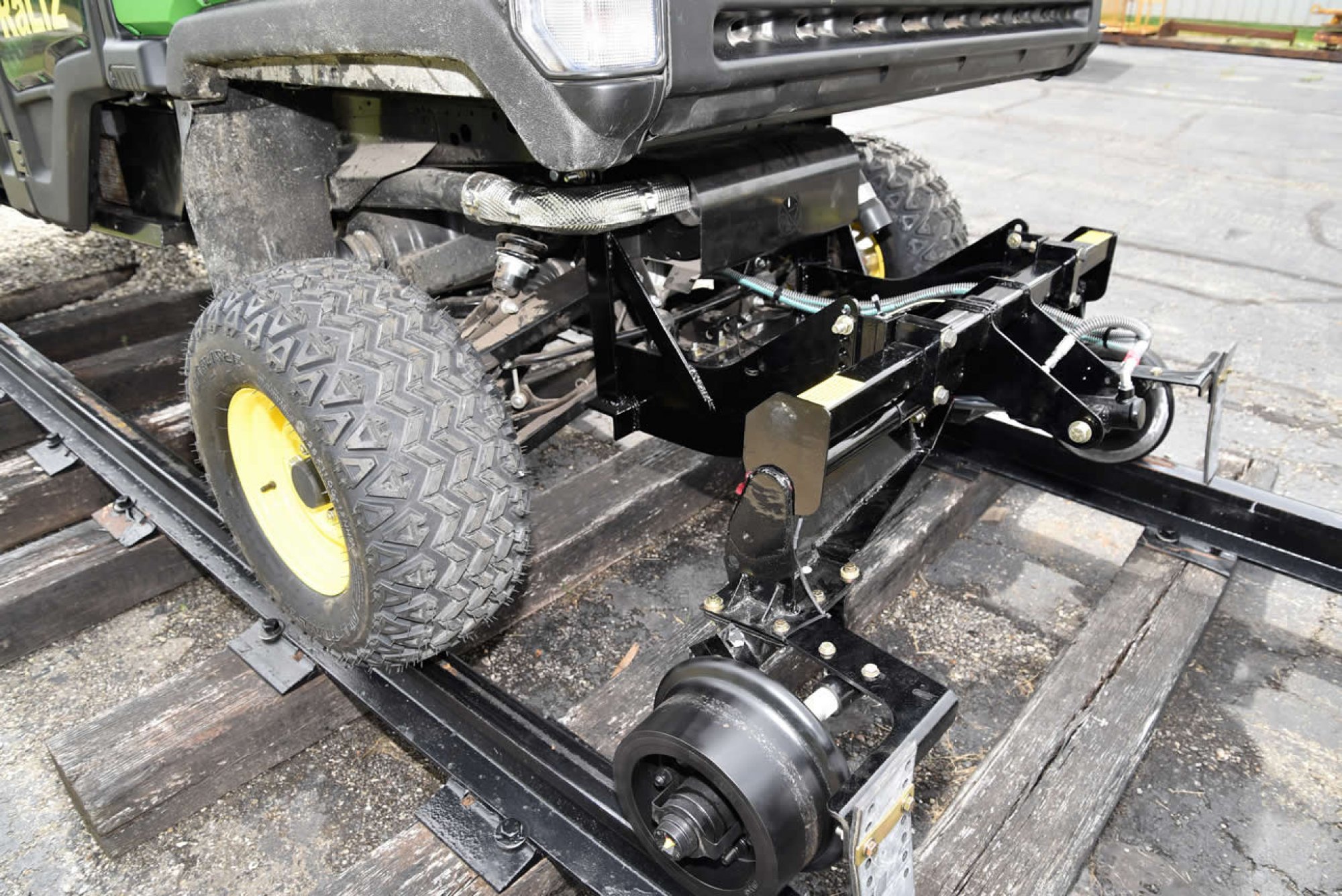
0505 RAIL GEAR FOR JOHN DEERE GATOR XUV825M


Mitchell's 0505 FlexiRide Rail Gear

Introducing Mitchell's 0505 Flexiride® Rail Gear for John Deere Gator Utility Vehicles

Mitchell's 0505 Rail Gear, is a cutting-edge solution designed to revolutionize the performance of John Deere Gator light utility vehicles both on railroad tracks and off-road. Our system boasts a host of innovative features, ensuring optimal adaptability, ease of use, and safety.

1. FlexiRide® Suspension:

At the heart of Mitchell's Rail Gear is our state-of-the-art 4-wheel independent FlexRide® suspension. This adaptive system automatically adjusts to tackle uneven track conditions, providing a seamlessly smooth ride on rail tracks and regular roads alike.

2. Secure Attachment: 

Our rail gear system securely attaches to a specially adapted mounting kit that seamlessly integrates with the utility vehicle's frame. Our patented rail gear mounting system offers unparalleled flexibility, allowing effortless adjustments in both vertical and horizontal dimensions, ensuring precise alignment and loading.

3. Composite Rail Wheels:

 The core of our model 0505 rail gear is our exclusive composite rail wheels, consisting of three essential components:

Hardened Steel Forging Outer: This layer offers exceptional strength and wear resistance when interacting with steel railroad rails. Forged from a billet or ingot, it eliminates common casting issues, resulting in superior durability and increased wear resistance.

High-Strength Aluminum Inner Layer: Crafted from high-strength aluminum, this layer not only reduces overall weight but also serves as a natural heat sink, effectively regulating wheel-bearing temperatures.

Polyurethane Compound: The polyurethane compound acts as an insulating layer, significantly reducing the high-pitched ringing noise by up to 95% when compared to traditional plain steel rail wheels on steel railroad rails.

4. Streamlined Installation:

Traditional rail gear installation on light-duty utility vehicles can be labor-intensive and complex. Custom brackets and wiring are often required, which can complicate maintenance and pose safety concerns. Mitchell's 0505 Rail Gear has revolutionized this process:

Optimal Approach and Departure Angles: Our rail wheels pivot to achieve ideal approach and departure angles, enhancing off-road performance.

Hydraulic Locking: Our rail gear allows for easy hydraulic locking in the up/down positions via a convenient handheld remote.

Accessory Mounting System: Mitchell has developed an innovative accessory mounting system that conveniently houses all necessary hydraulics and electrical components, complete with pre-engineered hydraulic hose kits and wiring harnesses. This plug-and-play concept simplifies installation, eliminating the need for specialized skills.

5. Rail Shunts for Safety: 

For enhanced safety, our optional cartridge-style Rail Shunts seamlessly integrate into all Mitchell Rail Gear systems. These shunts can be controlled via a switch on the front rail gear, ensuring that track signals can be activated or deactivated as needed, thereby triggering crossing lights and gates when approaching a crossing.

6. User-Friendly Installation:

To meet our customers' needs, Mitchell has developed a complete kit that can be easily installed by any mechanic. This eliminates the need for customization, drastically reducing labor requirements, and simplifying the installation process while offering significant cost savings to our valued customers.

With Mitchell's 0505 FlexiRide Rail Gear, you not only get a cutting-edge rail solution that enhances performance but also prioritizes ease of use and safety, all while delivering substantial cost savings. Elevate your John Deere Gator's capabilities with Mitchell's Flexiride® Rail Gear. 

1515 FLEXIRIDE RAIL GEAR - CLASS 2 TRUCKS

 1515 FLEXIRIDE RAIL GEAR - CLASS 2 TRUCKS

0505 RAIL GEAR - Class 2 Trucks 

Model 0505 Flexiride Rail Gear Series II Rail fits Class 2 a 

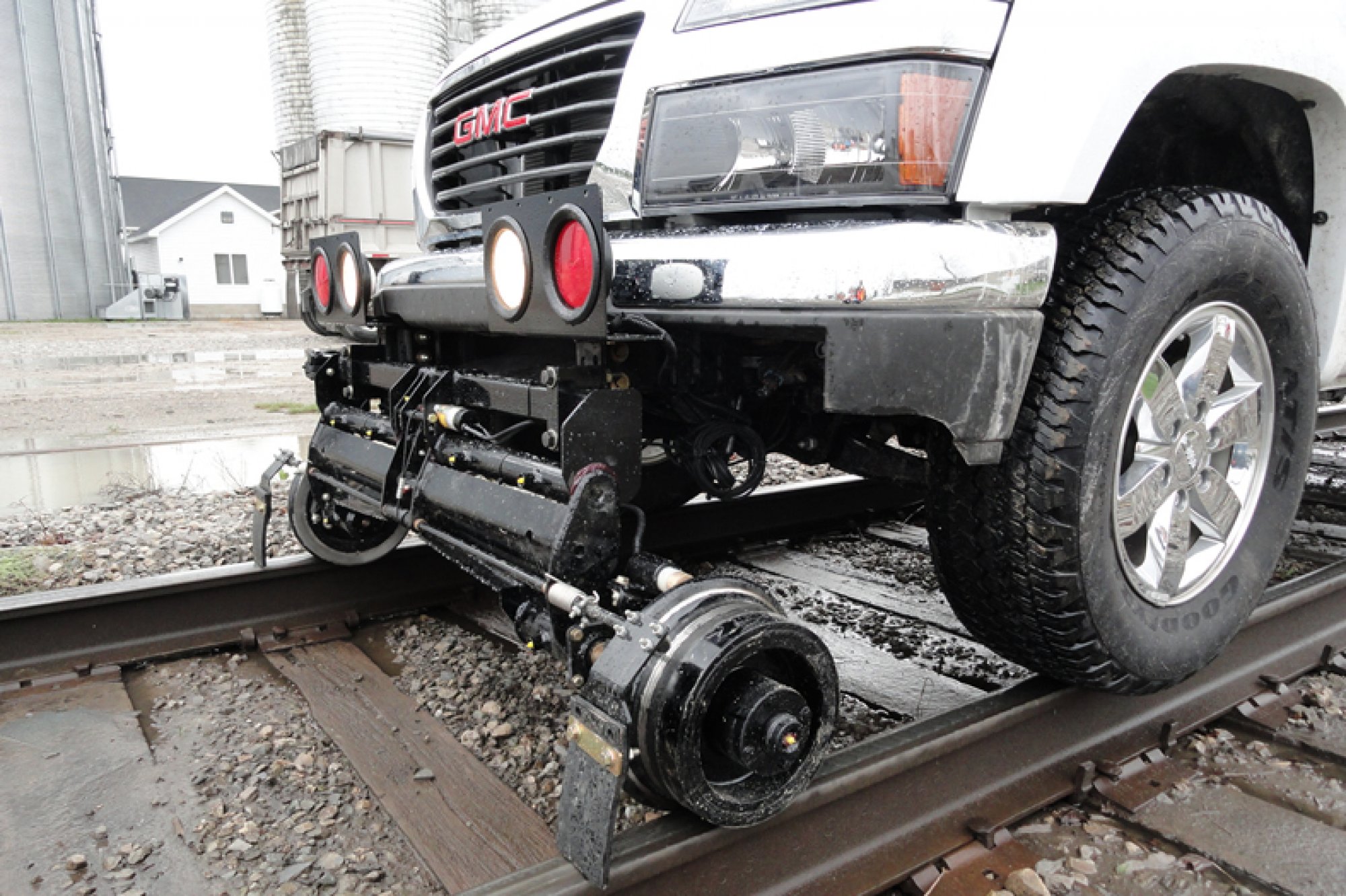
The Rail Gear Model 0505 Flexiride adapts to trucks for the purpose of traveling on the highway or railway. The Rail Gear is hydraulically raised and lowered by a single high flow hydraulic pump with hand pump that is generally installed on the truck frame about in the middle of the truck (Installers choice). In cab control panel comes standard but optional outside push button controls can be ordered. The Rail Gear utilizes Mitchell’s 4-Wheel Independent Flexiride® Suspension system that does not require adjustment for varying payloads up to the maximum gross vehicle weight of the truck. The Rail Gear comes standard with precision-machined forged 10-inch diameter rail wheels that can be upgraded to Mitchell’s composite rail wheels that reduce railhead noise up to 95%.  The front and rear Rail Gear units are identical modular units. The rail Gear kits comes complete with mounting brackets, built-in de-rail skids, and steering wheel lock.  Installer Provides replacment tires.


Rail Gear Component Weights

Rail gear unit weight each end: 285 lbs

Typical Mounting bracket kit each end: 25 lbs

Single Power Unit: 50 lbs


Options:

Cartridge Style Rail Shunts

Mitchell Rail Gear Cartridge style Rail Shunts adapt to all Mitchell Rail Gear systems for the purpose of either allowing track signals to be set off or not. The rail shunts can be controlled by a switch in the cab. When the rail shut system is in the on position there is a direct connection between the rail wheels left to right that allows a direct circuit between the right side and left side rail. When the Rail Gear vehicle gets close to the crossing the crossing circuit will be triggered and the crossing lights will go on and the gate will go down. The Cartridge Style Rail Shunt assembly is directly attached to the rail wheel axles so the shunts move with the rail wheel. The Shunt mechanism has a spring loaded cartridge that makes direct contact against each rail wheel. Composite rail wheels are required when ordering rail shunts.

Composite Rail Wheels

Mitchell Rail Gear Composite rail wheels are an up-grade from standard steel wheels. The Composite rail wheels reduce rail head noise by 90% over ordinary steel wheels. The outer in forged steel, the inner is high strength aluminum sandwiched in between special insulating material.

Outside Push Button Controls

Raise or Lower the Rail Gear indepently from each end of the vehicle.


Automatic UP/DN Locks

Automatically releases the safety locks the railgear is raised and re-engages the saftey locks when the rail gear is in the on track position.

SURE LUBE Bearing System: Superior Lubrication for Reliable Hi-Rail Performance | Mitchell Railgear

In the demanding world of rail maintenance and on-track operations, equipment reliability is everything. Hi-rail vehicles depend on smooth, ...